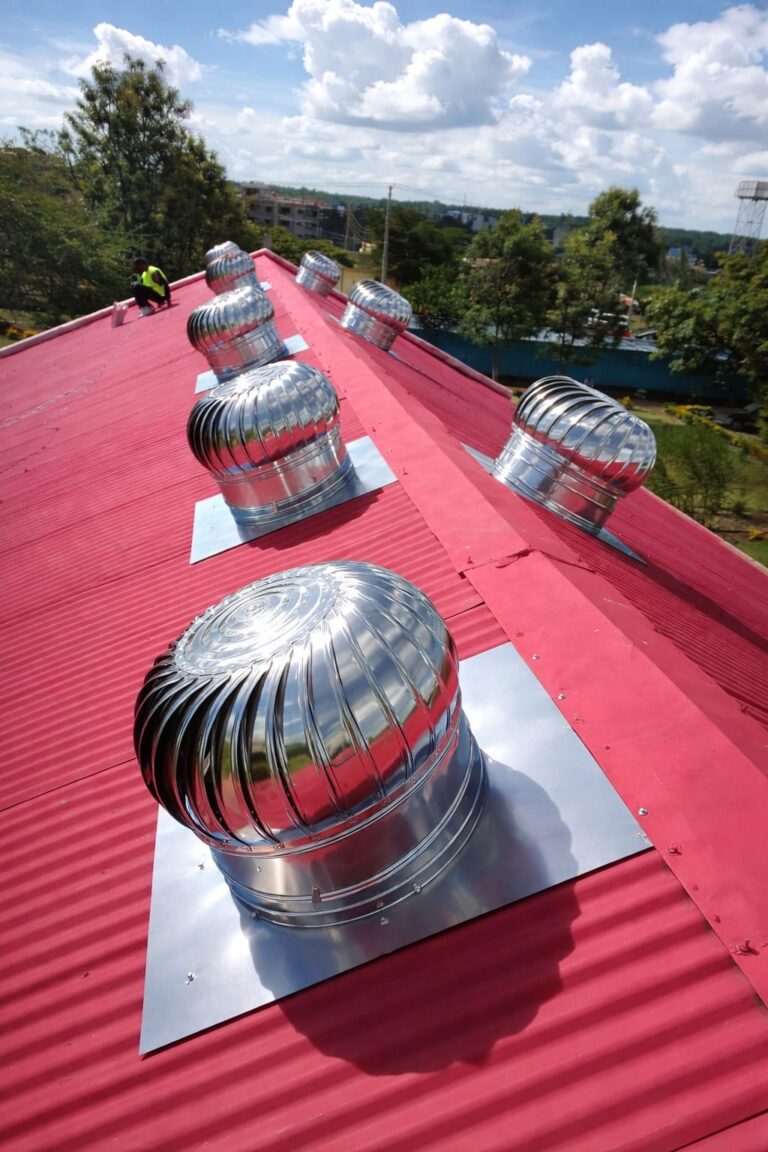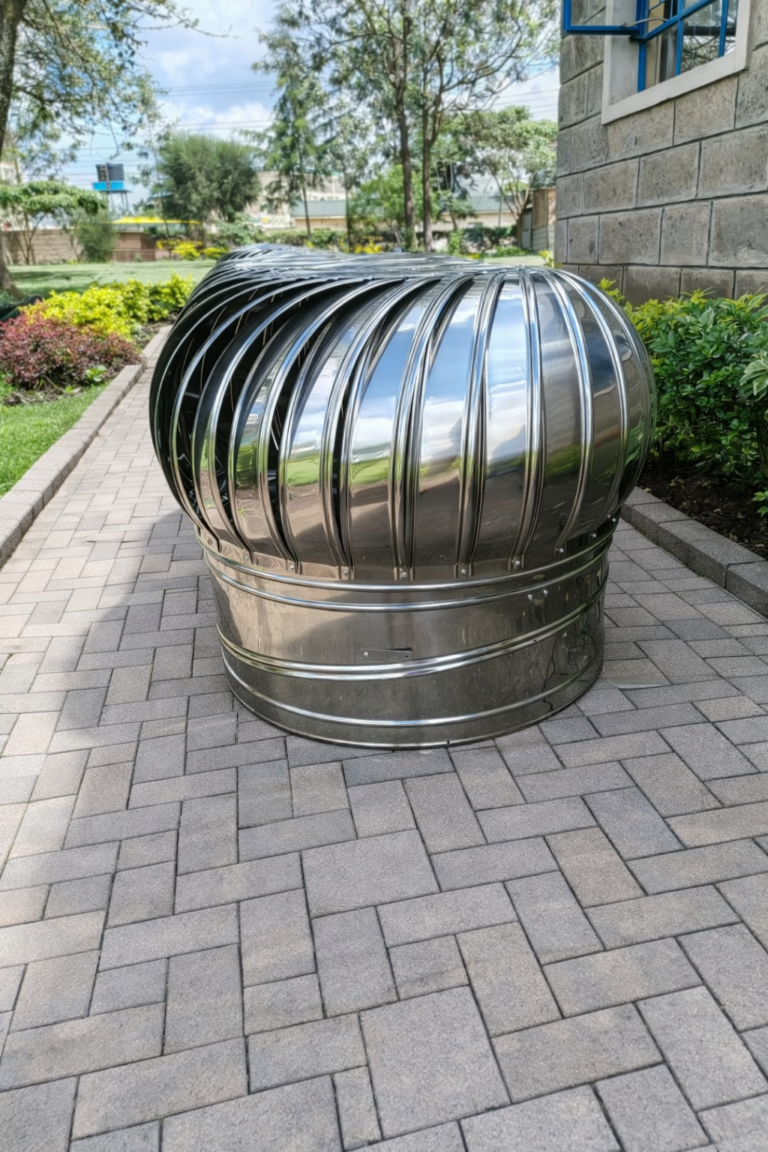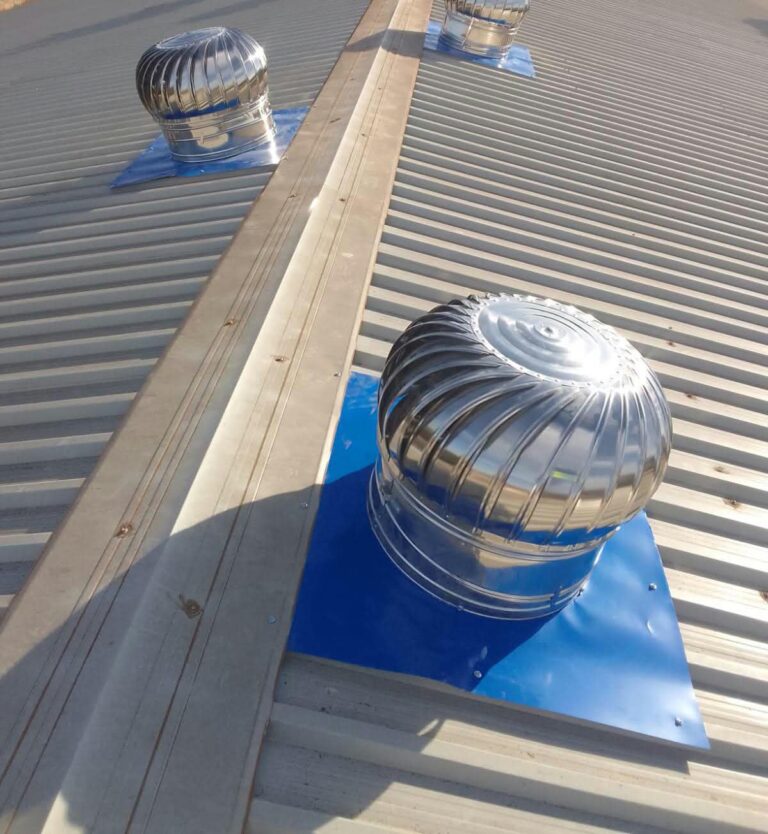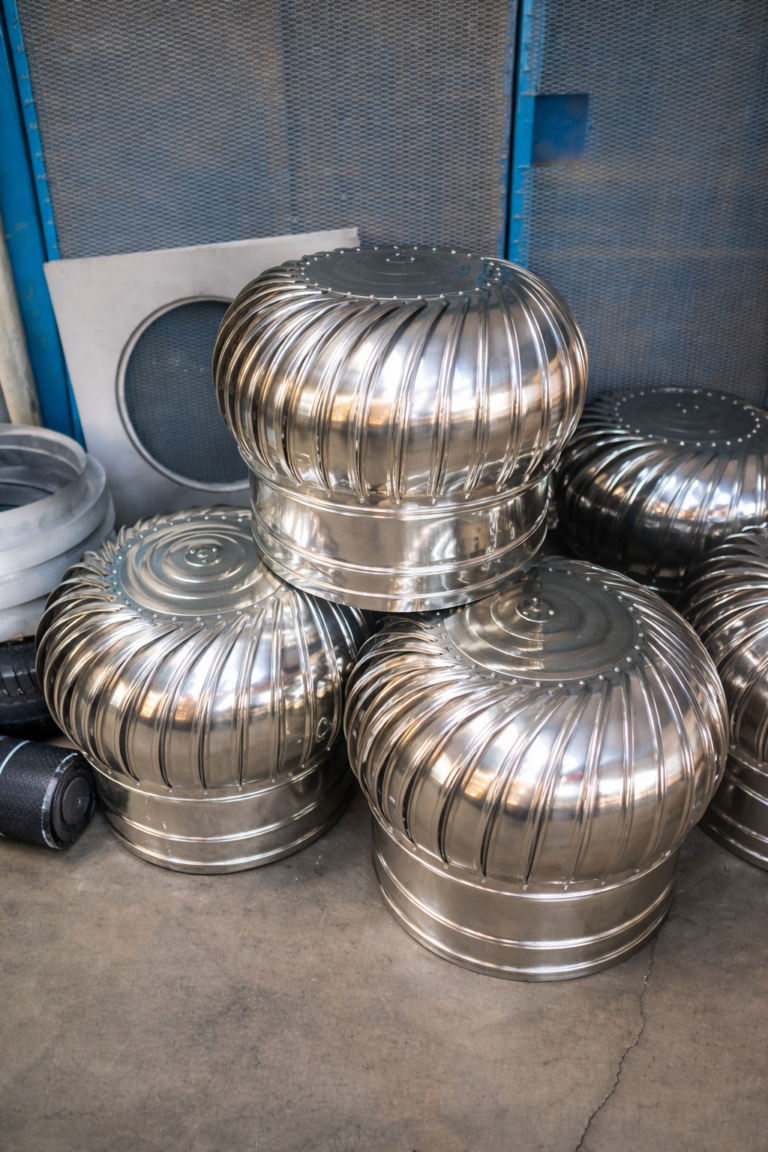
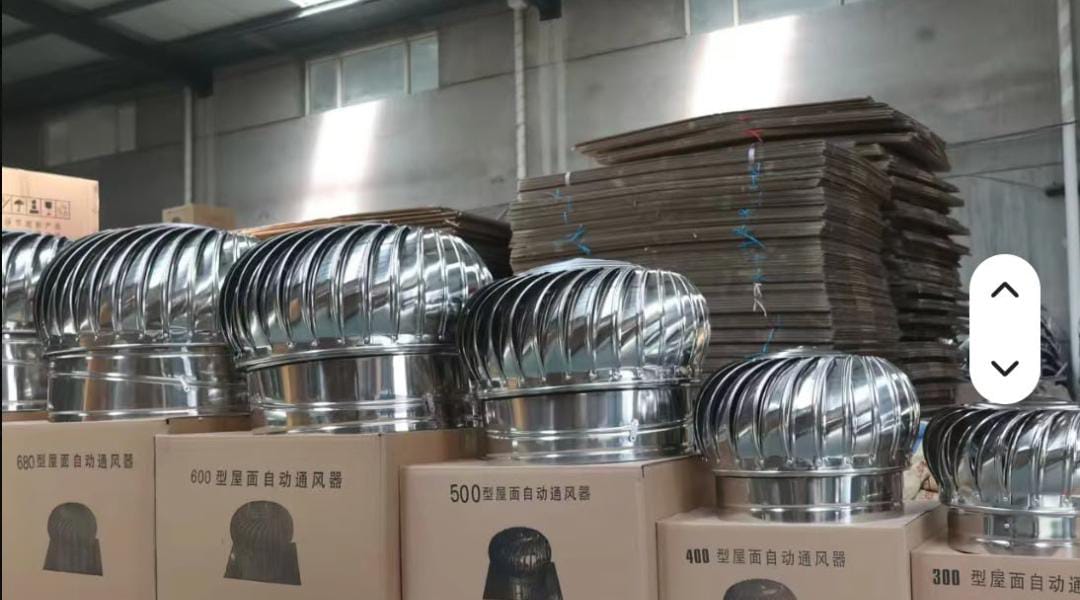
Roof Ventilator Sizes: Why Size Matters
Roof ventilator sizes range from small 200mm units for bathrooms up to large 600mm units for warehouses. Choosing the right size is one of the most important decisions you’ll make, because it affects how well your building cools, how many ventilators you need, and how much you spend.
Too small, and the heat stays trapped. Too large, and you may pay for more than you need, or end up with a unit that looks out of place on a house.
In this guide, we explain each size in simple terms, so you can choose with confidence.
What Does the Size Mean?
When someone says “a 500mm ventilator”, the number usually refers to the diameter of the throat, the round opening that connects the ventilator to your roof. In other words, it tells you how wide the passage for hot air is.
Simply put, a bigger opening lets more hot air escape, so larger ventilators move more air per unit.
Many sellers also use inches. For example:
- 300mm is about 12 inches
- 400mm is about 16 inches
- 500mm is about 20 inches
- 600mm is about 24 inches
The 5 Roof Ventilator Sizes at a Glance
200mm: for small rooms
Best for: bathrooms, toilets, small kitchens, single rooms and small stores.
Why: because small spaces need only a little extraction, and a compact unit looks neat on a house roof.
300mm: the home size
Best for: most bungalows, maisonettes, rental houses, small offices and shops.
Why: since it clears the roof space above a ceiling well, without looking bulky.
400mm: small to medium buildings
Best for: single classrooms, small poultry houses, brooding houses, small workshops and large homes.
Why: because it gives a step up in airflow, while still suiting lower roofs.
500mm: the popular middle size
Best for: most broiler and layer houses, garages, stores, dormitories and dining halls.
Why: since it balances strong airflow with a reasonable number of units.
600mm: for big roofs
Best for: warehouses, godowns, factories, churches, large halls and big commercial poultry houses.
Why: because it moves the most air per unit, so you need fewer ventilators to cover a large roof.
How to Choose the Right Size: 4 Simple Questions
Ask yourself these questions, in this order:
1. How big is the roof?
Small roofs suit 200–300mm, medium roofs suit 400–500mm, and large roofs suit 600mm.
2. How much heat or moisture is produced inside?
Machines, ovens, animals and crowds all add heat. Therefore, hot or busy buildings often need a larger size, or more units.
3. How high is the roof?
Low roofs feel hot quickly, so they need good extraction. On the other hand, high roofs hold a large volume of air, which larger ventilators handle well.
4. How should it look?
On homes, smaller units look neater. In contrast, on industrial roofs, a clean row of large units looks professional.
Size and Number Work Together
Choosing the size and the number go hand in hand. As a general guide, plan for one ventilator for every 20–30 m² of roof. However, larger ventilators move more air, so you can often use fewer of them.
For example, a large warehouse could need many small units, or noticeably fewer 600mm units. Likewise, a house usually needs just 1–4 small units.
For the step-by-step calculation, read How Many Roof Ventilators Do I Need in Kenya?
Common Sizing Mistakes to Avoid
- Choosing small units for a big building to save money. As a result, you need far more of them, and the roof gets more openings to seal.
- Putting a 600mm unit on a small house. It’s usually more than needed, and it can look out of place.
- Ignoring the heat inside. For instance, a bakery and a store of the same size need very different airflow.
- Mixing sizes randomly. Instead, keep one size per roof section, so airflow stays even.
Why Bigger Isn’t Always Better
It’s tempting to think the biggest ventilator is always best. However, the right choice is the one that matches your building. In fact, a well-sized, well-placed ventilator does more than an oversized one in the wrong spot.
This works because of the stack effect: warm air rises and escapes at the highest point, while cooler air flows in lower down. Therefore, placement along the ridge and fresh-air openings below matter just as much as size.
Quick Size Guide by Building
- Bathroom or toilet: 200mm
- House or rental unit: 300mm. See Roof Ventilators for Homes
- Classroom or small workshop: 400mm
- Poultry house: 400–500mm. See Poultry House Ventilation
- Garage, store or dormitory: 500mm. See 400mm and 500mm Roof Ventilators
- Kitchen or bakery: 400–500mm, with extra units over cooking areas. See Kitchen and Workshop Fume Extraction
- Church or large hall: 600mm. See Church, School and Hall Ventilators
- Warehouse or factory: 600mm. See 600mm Cyclone Roof Ventilator and Warehouse Ventilation
For all five sizes in one place, see our Stainless Steel Cyclone Roof Ventilator.
Does Size Affect Leaks?
Not directly. Whatever the size, leaks come from poor sealing or a badly cut opening. However, fewer, larger units mean fewer openings to seal. To learn more, read Do Roof Ventilators Leak?
Still Not Sure? Let Us Size It for You
Every building is different. So, the easiest way is to send us:
- Your building type, for example house, poultry house or warehouse
- The roof size, in metres or feet
- A photo of the roof, if possible
- Your location
Then we’ll recommend the right size and number, and send a quote with or without installation.
+254 722 664 867 | Chat on WhatsApp | info@bioflexinsulationlimited.co.ke
Conclusion
Roof ventilator sizes run from 200mm to 600mm. In short: small sizes suit homes and small rooms, middle sizes suit poultry houses, classrooms and workshops, and 600mm suits warehouses, factories and churches. Above all, match the size to your roof area and the heat inside, then place the units correctly.
Frequently Asked Questions
1. What sizes do roof ventilators come in?
Commonly, 200mm, 300mm, 400mm, 500mm and 600mm.
2. Which roof ventilator size is best for a house?
Most homes suit 300mm. However, bathrooms suit 200mm, and large homes may suit 400mm.
3. Which size is best for a poultry house?
Most poultry houses suit 500mm, while small or brooding houses suit 400mm.
4. What size ventilator does a warehouse need?
Usually 600mm, because it moves the most air per unit.
5. Is a 600mm ventilator the same as 24 inch?
Yes. 600mm is about 24 inches.
6. Is a bigger ventilator always better?
No. Instead, choose the size that matches your roof area and the heat inside.
7. Can I mix sizes on one roof?
You can, but it’s best to keep one size per roof section, so airflow stays even.