Kitchen & Workshop Fume Extraction Ventilators
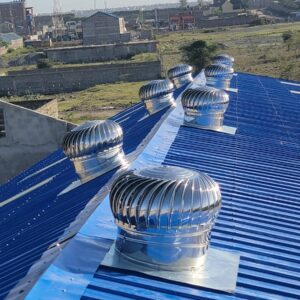
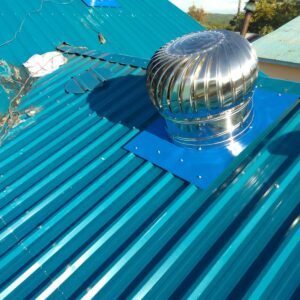
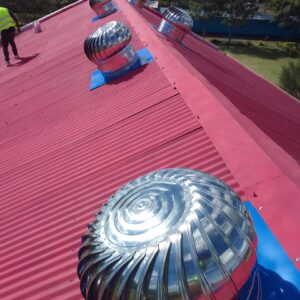
Good kitchen smoke extraction makes cooking spaces cooler, cleaner and safer, and the same goes for workshops and garages full of fumes. Our stainless steel roof ventilators pull smoke, cooking heat, steam and fumes out from the top of the building, using only the wind. For heavy smoke or fumes, we also supply exhaust fans to work alongside them. Supply and installation across Kenya.
Description
Kitchen Smoke Extraction and Workshop Fume Control, Without Electricity
Kitchen smoke extraction is a daily challenge for hotels, restaurants, bakeries and school kitchens across Kenya. Similarly, workshops and garages struggle with welding fumes, paint smells and engine heat. In both cases, smoke and fumes rise to the roof, but with nowhere to escape, they build up and spread back down.
As a result, cooks and workers breathe dirty air all day. In addition, walls and ceilings turn black with soot, and the heat becomes exhausting.
Fortunately, roof ventilators give smoke and fumes a way out, continuously and without power costs.
Why Smoke and Fumes Are a Serious Problem
Smoke from firewood and charcoal isn’t just unpleasant. In fact, the World Health Organization links smoke from cooking fuels to serious health problems. Therefore, institutions and businesses that cook with firewood or charcoal especially need good ventilation.
Likewise, welding fumes, solvents and spray paint can harm workers who breathe them every day.
Signs Your Kitchen or Workshop Needs Better Extraction
- Smoke hangs under the roof or drifts into dining areas and offices
- Ceilings and walls turn black with soot
- Cooks or workers complain of stinging eyes, coughing or headaches
- The kitchen becomes unbearably hot during cooking hours
- Fumes and paint smells linger long after work stops
- Steam drips back down from the roof
For more warning signs, see Signs Your Building Has Poor Ventilation.
How Roof Ventilators Help
First, smoke, steam and fumes rise to the highest point of the roof. Then the spinning ventilators pull them out continuously. Meanwhile, fresh air comes in through doors, windows and wall vents.
As a result:
- Smoke and fumes clear faster, so the air is easier to breathe
- Cooking heat escapes, which keeps cooks more comfortable
- Less soot settles on walls and ceilings
- Steam and moisture escape, therefore there’s less dripping and mould
- No electricity is needed, so they keep working during power cuts
Where We Install
For example:
- School and college kitchens, including those using firewood or large jikos
- Hotel and restaurant kitchens
- Bakeries, where ovens produce constant heat
- Hospital and institutional kitchens
- Welding and metal workshops, including jua kali sheds
- Garages and car service bays
- Paint, spray and carpentry workshops
- Factory production areas with heat or fumes
Roof Ventilators or Exhaust Fans? An Honest Answer
Roof ventilators are excellent for general extraction: they clear rising smoke, heat and fumes from the whole building. However, some situations need more:
- Heavy, direct cooking smoke, for example over deep fryers or grills, is best handled by a hood and an exhaust fan, with roof ventilators clearing the rest of the room.
- Intense welding or spray painting may need a fan close to the source, while roof ventilators handle general airflow.
Because we supply both, we’ll recommend what your space actually needs. See our Exhaust Ventilation Fan and Centrifugal Ventilation Fan.
Which Ventilator Size Is Best?
- 300mm: small kitchens and small workshops
- 400mm–500mm: most school, hotel and restaurant kitchens, bakeries and garages
- 600mm: large workshops, institutional kitchens and big garages
To compare sizes, see 400mm and 500mm Roof Ventilators and 600mm Cyclone Roof Ventilator. For all sizes in one place, see the Stainless Steel Cyclone Roof Ventilator.
How Many Do You Need?
Because kitchens and workshops produce a lot of heat and smoke, plan for about one ventilator for every 20 m² of roof. Also, place extra ventilators directly above stoves, ovens or welding areas.
For example:
- A school kitchen of 10m × 6m (60 m²) needs about 3 ventilators, plus one above the main cooking area
- A workshop of 15m × 10m (150 m²) needs about 6–8 ventilators
For the full method, read: How Many Roof Ventilators Do I Need in Kenya?
Your Common Questions Answered
Will grease clog the ventilator?
In kitchens with heavy frying, grease can build up over time. For this reason, we recommend a hood and exhaust fan over fryers, and occasional cleaning of roof ventilators above cooking areas.
Will it leak when it rains?
No, as long as it’s installed properly. In addition to the rain-proof design, our installers seal every base carefully.
Are stainless steel ventilators safe above hot kitchens?
Yes. Stainless steel handles heat and moisture well, and it resists rust from steam.
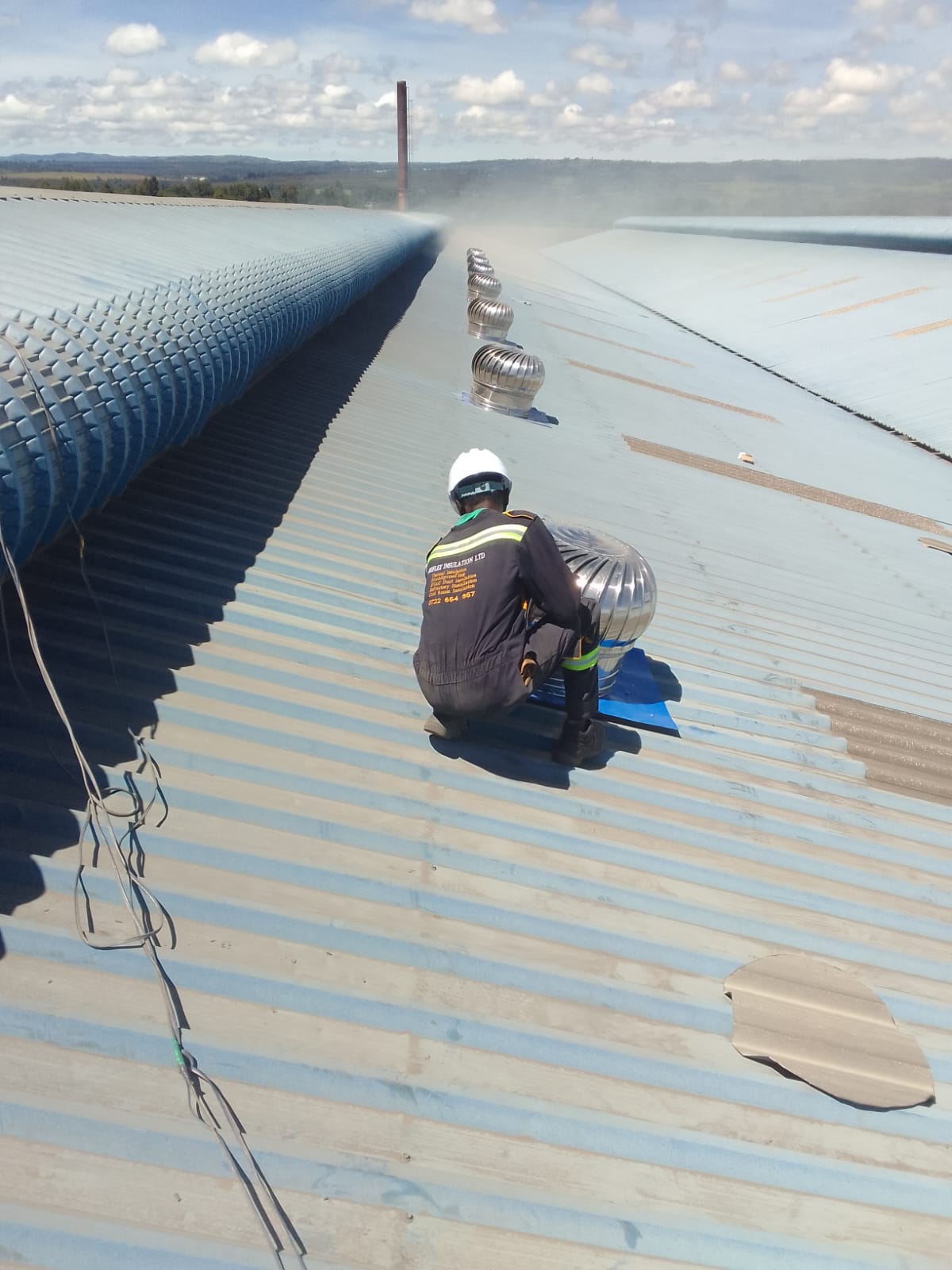
Professional Installation
- First, we inspect the kitchen or workshop and find the main smoke and fume sources.
- Next, we recommend the right size, number and placement, and whether you also need fans.
- Then we fit and seal each ventilator.
- Finally, we check that every unit spins freely and the roof is watertight.
To learn more, see: Cyclone Roof Ventilator Installation in Kenya and East Africa
Why Choose Bioflex for Kitchen Smoke Extraction
- Stainless steel ventilators, built to handle heat and steam
- Honest advice on ventilators, fans or both
- Experience with schools, hotels, bakeries and workshops
- One supplier for ventilation, insulation and refractory work, including ovens and kitchen builds
- Installation in Nairobi and across Kenya
Fitting out several kitchens or workshops? See Wholesale Cyclone Roof Ventilators for Contractors.
How to Order
- First, send us the size of your kitchen or workshop, what it’s used for and your location on WhatsApp.
- Next, we recommend ventilators, fans or a combination.
- Then you receive your quote, with or without installation.
- Finally, we install at a time that suits your work schedule.
📞 +254 722 664 867 | 💬 Chat on WhatsApp | 📧 info@bioflexinsulationlimited.co.ke
Frequently Asked Questions
1. What is the best kitchen smoke extraction without electricity?
Roof ventilators. Because smoke rises, they pull it out from the top of the kitchen using only the wind.
2. Do roof ventilators work for firewood kitchens?
Yes. They help clear smoke from school and institutional kitchens that use firewood or large jikos. For heavy smoke, a chimney or hood may also help
3. Can roof ventilators remove welding fumes?
They help clear fumes that rise to the roof. However, intense welding may also need a fan close to the work area.
4. Do I need an exhaust fan or a roof ventilator?
For general smoke and heat, roof ventilators work well. For heavy frying, grilling or intense fumes, a fan is also recommended. Either way, we’ll advise you.
5. Will grease affect the ventilator?
Over heavy frying, grease can build up. Therefore, we recommend hoods over fryers and occasional cleaning.
6. Which size is best for a restaurant kitchen?
Most restaurant kitchens suit 400mm–500mm. However, large kitchens may need 600mm.
7. Do they need electricity?
No. They run on wind and rising hot air, so there are no running costs.
8. Do you install outside Nairobi?
Yes. We install across Kenya, and also serve clients in East Africa.