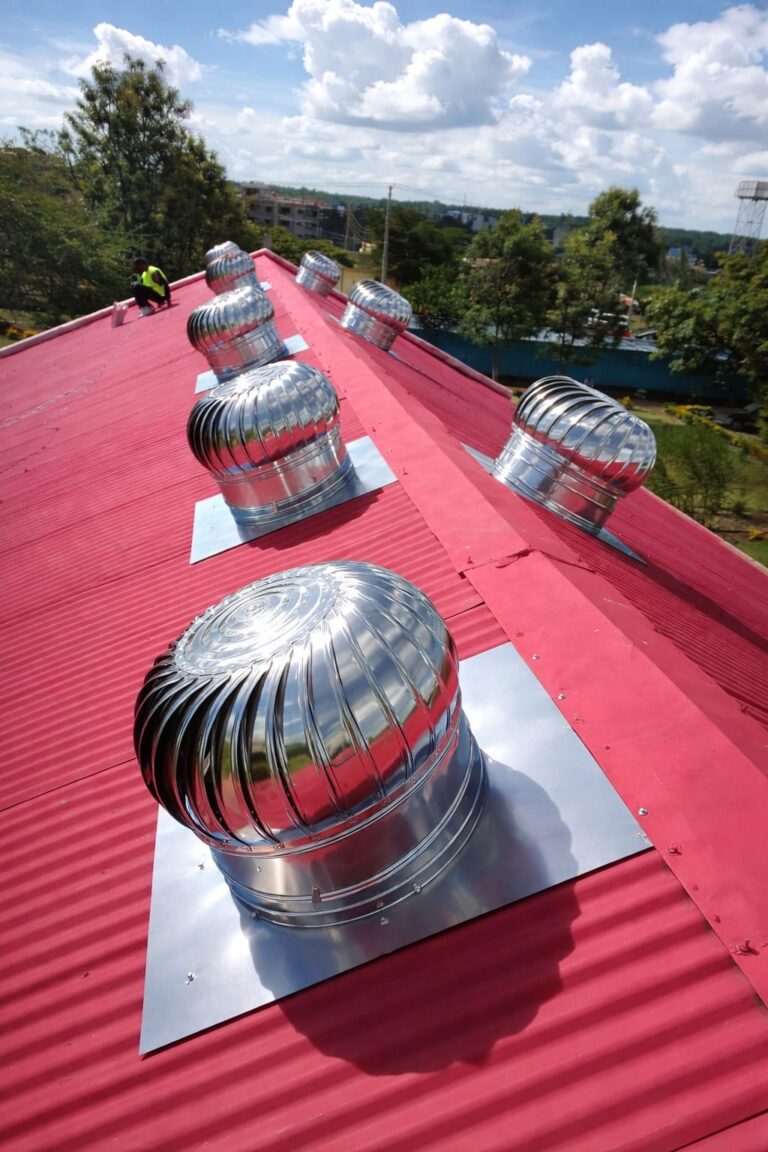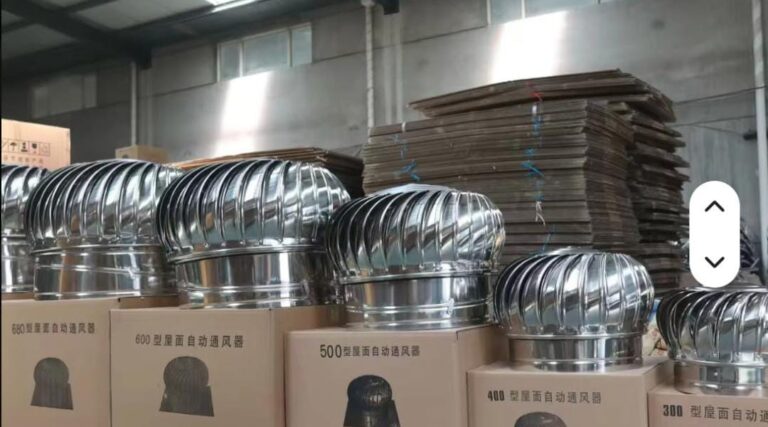
What Is the Best Roof Ventilator Material?
What is the best roof ventilator material? It’s a question many buyers only ask after their first ventilator has rusted, bent or started leaking. In Kenya, cyclone ventilators are sold in three main materials: stainless steel, galvanised steel and aluminium. At first glance, they can look almost the same, but they behave very differently on a roof.
In this guide, we compare all three, so you can choose a ventilator that lasts.
Why Material Matters So Much
A roof ventilator lives outdoors all year. In other words, it faces strong sun, heavy rain, wind and, in many buildings, moisture and fumes from inside. Over time, the wrong material will:
- Rust, which weakens the ventilator and stains the roof
- Leak, once rust eats through the metal
- Bend or dent, so the turbine wobbles or stops spinning
- Need replacing early, which means paying twice
Therefore, the material decides how long your ventilator really lasts, not just how it looks on day one.
Option 1: Stainless Steel
How it resists rust: stainless steel contains chromium, which forms a thin, invisible protective layer on the surface. If that layer is scratched, it repairs itself. As a result, stainless steel resists rust far better than ordinary steel.
Strengths:
- Excellent rust resistance, even in humid areas
- Strong and rigid, so it holds its shape in wind
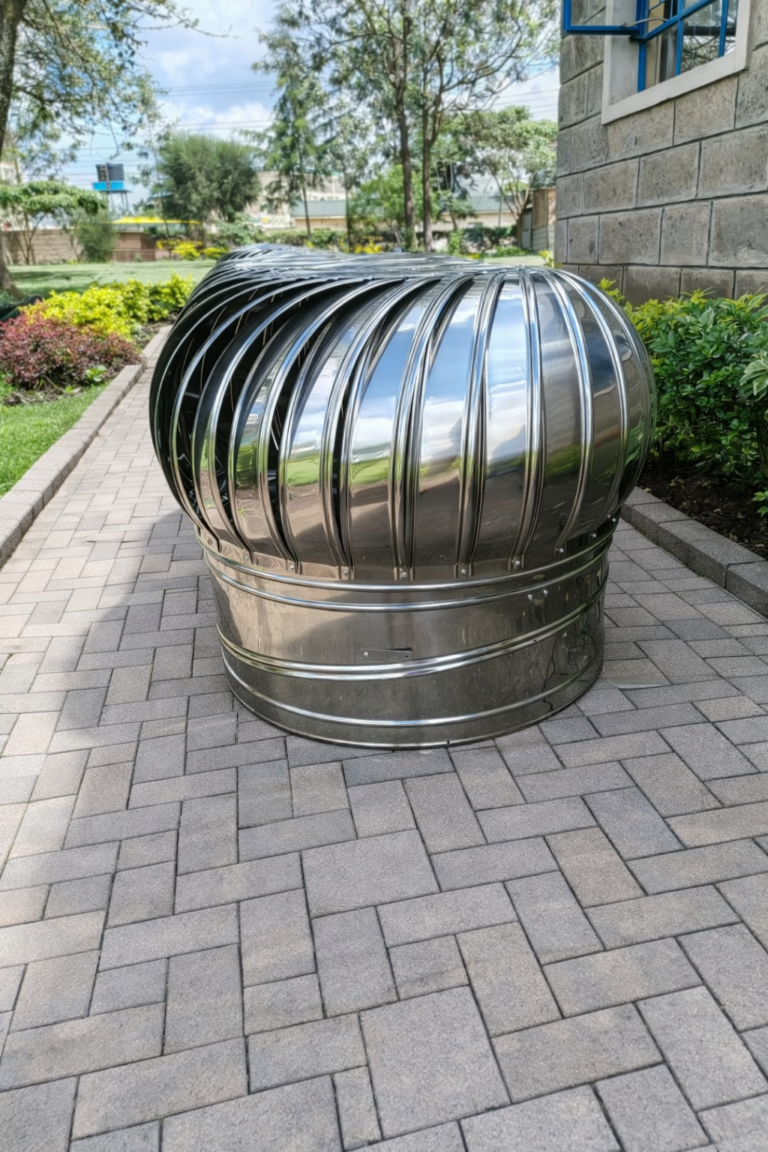
- Keeps its shine for years
- Handles heat and steam, which suits kitchens, bakeries and poultry houses
Weaknesses:
- Costs more upfront than galvanised
- Quality varies by grade, so not all “stainless” is equal (more on this below)
Best for: almost every building, and especially the coast, poultry houses, kitchens, factories and anywhere with moisture or fumes.
Option 2: Galvanised Steel
How it resists rust: galvanised steel is ordinary steel coated with a layer of zinc. This process is called galvanisation. As long as the zinc coating stays intact, the steel underneath is protected.
Strengths:
- Cheaper than stainless steel
- Strong, like ordinary steel
Weaknesses:
- Once the zinc coating is scratched or wears away, the steel underneath rusts
- Cut edges rust first, because they have no coating
- Rusts faster in humid, salty or fume-filled air
- Rust streaks can stain the iron sheets below
Best for: dry areas and low-moisture buildings, where the budget is very tight. However, expect a shorter life.
Option 3: Aluminium
How it resists rust: aluminium doesn’t rust in the way steel does. Instead, it forms a thin oxide layer that protects it.
Strengths:
- Doesn’t rust like steel
- Very light
Weaknesses:
- Softer, so it dents and bends more easily
- Thin vanes can deform in strong wind, which makes the turbine wobble or rub
- Some cheap aluminium units are flimsy, even though they look fine in the shop
Best for: small, light-duty uses, such as small sheds or homes in sheltered spots.
Side-by-Side Comparison
Rust resistance
- Stainless steel: excellent
- Galvanised: good at first, then poor once the coating wears
- Aluminium: good
Strength in wind
- Stainless steel: strong
- Galvanised: strong
- Aluminium: weaker, dents easily
Coast and humid areas
- Stainless steel: best choice
- Galvanised: rusts quickly
- Aluminium: acceptable, but can corrode in salty air over time
Kitchens, poultry houses and factories
- Stainless steel: best choice
- Galvanised: rusts faster, because of steam, ammonia and fumes
- Aluminium: may dent and wear sooner
Upfront cost
- Stainless steel: highest
- Galvanised: lowest
- Aluminium: low to medium
Value over time
- Stainless steel: best, because it lasts the longest
- Galvanised: lower, since replacement comes sooner
- Aluminium: fair for light use
Not All Stainless Steel Is the Same
Here’s something many buyers don’t know: stainless steel comes in different grades. For example, grade 304 is widely used outdoors because it resists corrosion well. Meanwhile, cheaper grades such as 201 contain less nickel, so they can show rust spots sooner, especially at the coast.
Therefore, when buying, ask the seller which grade their ventilators are made from.
How to Spot the Difference When Buying
- Look at the finish. Stainless steel has a bright, even shine. Galvanised steel often has a dull grey or “spangled” crystal pattern.
- Check the weight and feel. Flimsy, very light units that bend easily under your hand are usually thin aluminium.
- Try a magnet. Galvanised steel is strongly magnetic. In contrast, good stainless steel and aluminium are not, or only very slightly. However, a magnet can’t tell stainless grades apart.
- Look at the edges and rivets. Rust at cut edges or joints is an early warning sign.
- Ask about the grade and warranty, because a confident seller will tell you.
Special Case: Mombasa and the Coast
At the coast, salty, humid air attacks metal much faster than inland. As a result, galvanised ventilators can rust within a short time. Therefore, for Mombasa, Kilifi, Malindi, Diani and Lamu, stainless steel is strongly recommended.
Special Case: Poultry Houses, Kitchens and Factories
Inside these buildings, the air carries ammonia, steam, smoke or chemical fumes. Because that air passes straight through the ventilator, cheaper metals wear out faster. For this reason, stainless steel is the safest choice for:
Rust and Leaks Are Linked
Once rust eats through a ventilator, water finds its way in. So choosing a rust-resistant material is one of the best ways to prevent leaks. To learn more, read Do Roof Ventilators Leak?
Our Ventilators: Stainless Steel, Built to Last
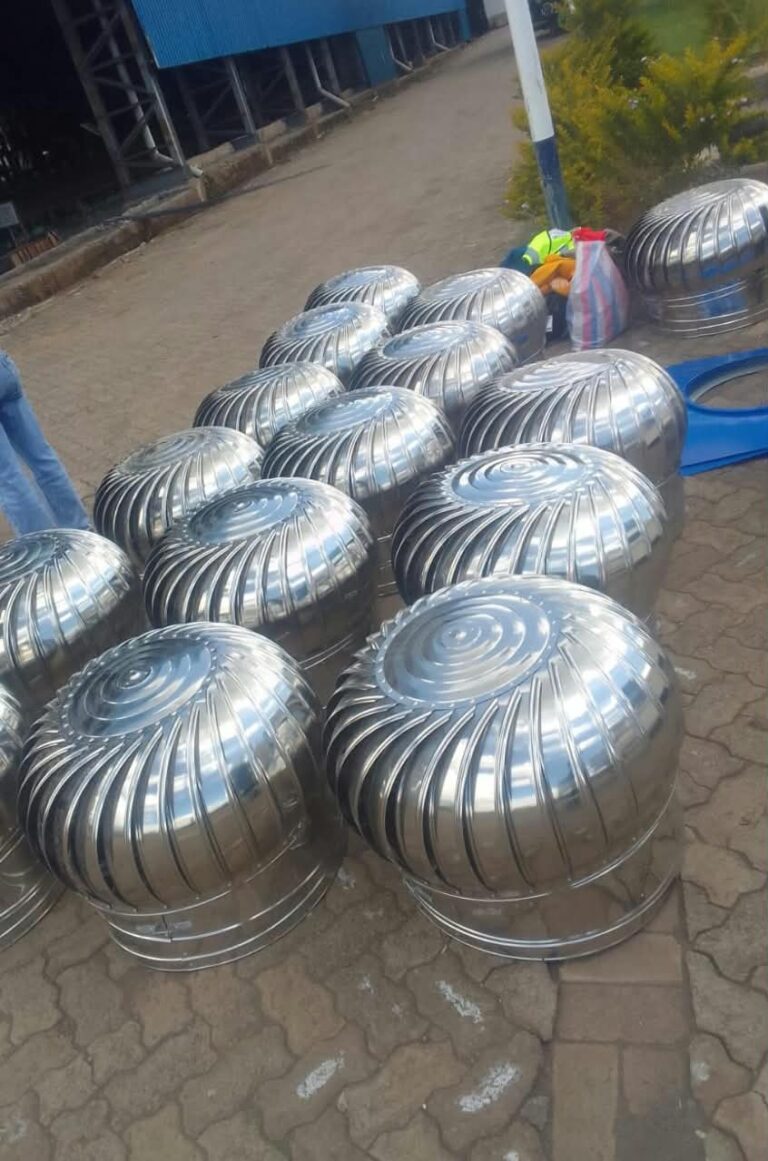
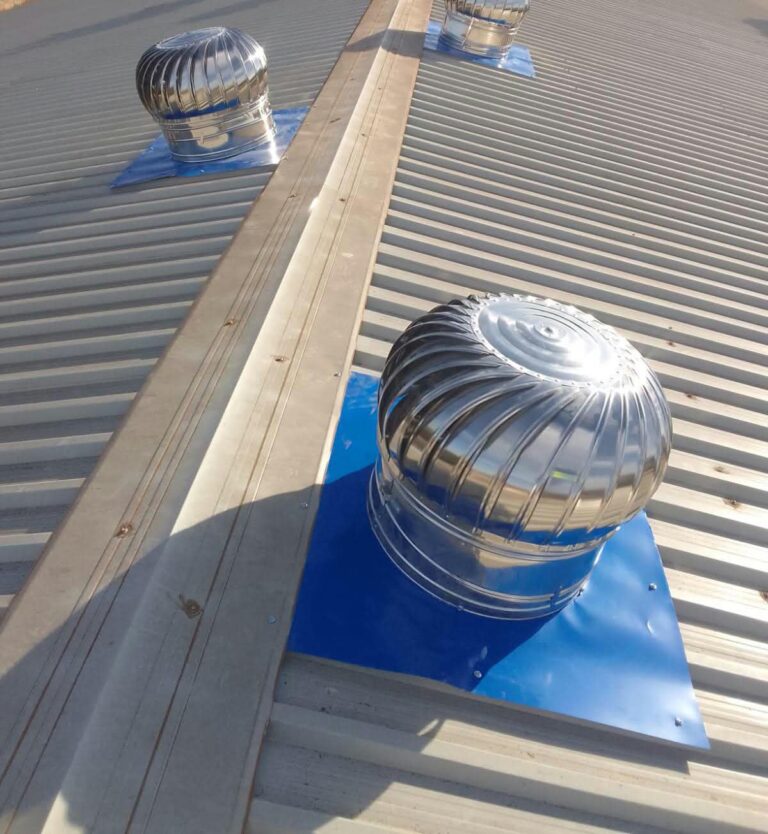
At Bioflex Insulation Ltd, we supply stainless steel cyclone ventilators in all five sizes, from 200mm to 600mm. That way, you get a ventilator that resists rust, holds its shape and keeps your roof dry for years.
- See our Stainless Steel Cyclone Roof Ventilator range
- Not sure of the size? Read Roof Ventilator Sizes Explained
- Need fitting? See Roof Ventilator Installation
- Are you a hardware shop? Fewer returns mean happier customers. See Wholesale Cyclones for Resellers
+254 722 664 867 | Chat on WhatsApp | info@bioflexinsulationlimited.co.ke
Conclusion
So, what is the best roof ventilator material? For most buildings in Kenya, it’s stainless steel, because it resists rust, stays strong in wind and lasts the longest. Galvanised steel costs less upfront, but it rusts once the coating wears. Meanwhile, aluminium suits only light-duty uses. In the end, paying a little more once is cheaper than replacing a rusted ventilator later.
Frequently Asked Questions
1. What is the best material for a roof ventilator?
For most buildings, stainless steel, because it resists rust and lasts the longest.
2. Do galvanised roof ventilators rust?
Yes, eventually. Once the zinc coating wears or is scratched, the steel underneath rusts.
3. Are aluminium roof ventilators good?
They don’t rust like steel, but they’re softer, so they dent and bend more easily.
4. Which roof ventilator is best for Mombasa?
Stainless steel, because salty coastal air quickly rusts galvanised metal.
5. What grade of stainless steel is best for roof ventilators?
Grade 304 is widely used outdoors because it resists corrosion well. So always ask the seller which grade they use.
6. How can I tell stainless steel from galvanised?
Galvanised steel is strongly magnetic and often dull grey. In contrast, stainless steel has a bright shine and is not, or only slightly, magnetic.
7. Is a stainless steel ventilator worth the extra cost?
Yes, for most buyers, because it lasts much longer and avoids rust-related leaks.