Virgin vs Recycled EPS Beads: Which Should You Buy in Kenya?
When you shop for styrofoam beads in Kenya, you’ll notice big price differences between suppliers. Often, the reason is simple: some sell virgin beads, while others sell recycled beads, sometimes called regrind.
At first glance, they can look similar. However, the difference shows up quickly once you sit on a bean bag, fill a cushion or open the bag. In this guide, we compare virgin vs recycled EPS beads honestly, so you can choose the right one for your project and your budget.
What Are Virgin EPS Beads?
Virgin EPS beads are made from new expanded polystyrene. In other words, they have never been used before.
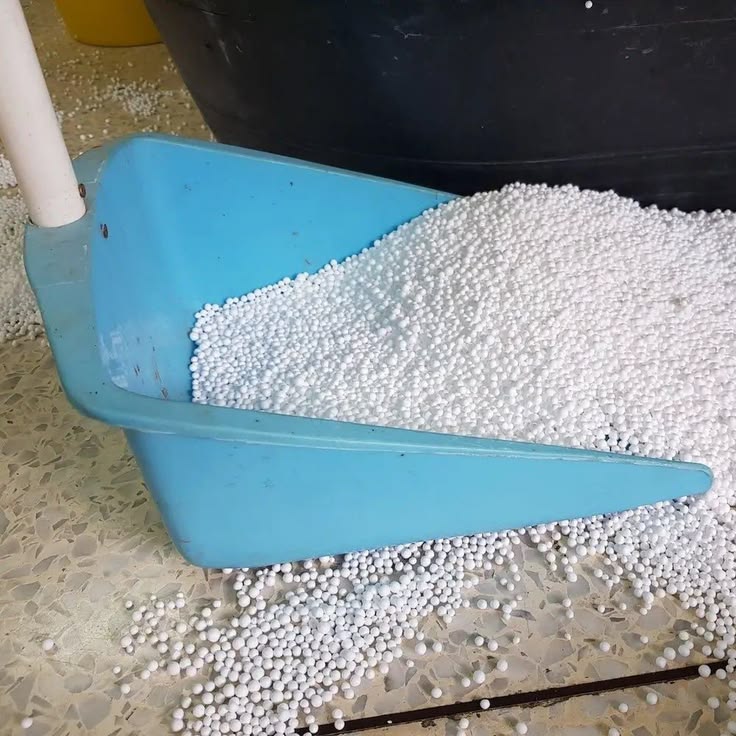
During production, each bead expands into a smooth, round ball of uniform size. As a result, virgin beads are bright white, clean and springy. At Bioflex, all our beads are virgin, 3–6mm in size and packed in sealed 1kg bags.
What Are Recycled EPS Beads?
Recycled EPS beads, often called regrind, are made by shredding used polystyrene, such as old packaging, boxes and sheets. The shredded pieces are then sold as filling.
Recycling EPS is good for the environment, because it keeps polystyrene out of dumpsites. However, because the material has already been used and broken up, the pieces are usually irregular in shape and size, and quality varies from batch to batch.
Virgin vs Recycled EPS Beads: Side-by-Side
| Feature | Virgin EPS beads | Recycled EPS beads (regrind) |
|---|---|---|
| Shape | Smooth, round beads | Irregular, jagged chunks |
| Size | Uniform | Mixed, from dust to large pieces |
| Colour | Bright white | Often off-white, grey or speckled |
| Dust | Very little | Can be dusty |
| Feel through fabric | Smooth and soft | Can feel lumpy or scratchy |
| Bounce | Springy, recovers well | Flattens faster |
| Lifespan in bean bags | Longer | Shorter, needs refilling sooner |
| Consistency | The same every batch | Varies by source |
| Price | Higher upfront | Lower upfront |
The Key Differences Explained
1. Comfort
Because virgin beads are round and uniform, they roll smoothly past each other. Consequently, a bean bag or cushion filled with virgin beads moulds evenly around your body.
Recycled pieces, on the other hand, are jagged and mixed in size. Therefore, they tend to lock together, which can make a bean bag feel lumpy and uneven.
2. Lifespan
Virgin beads also hold their shape longer, because each bead is whole of air. Recycled pieces, however, are often already partly crushed. As a result, products filled with regrind usually flatten sooner and need topping up more often. Our guide on how to refill a bean bag explains what to do when that happens.
3. Cleanliness
In addition, virgin beads are clean and nearly dust-free. Recycled material, in contrast, can contain fine dust and, depending on where it came from, bits of tape, labels, dirt or other contaminants. This matters especially for children’s furniture, pet beds and décor.
4. Appearance
For crafts, décor and Christmas snow effects, colour is everything. Virgin beads stay bright white, while recycled pieces can look grey, yellowish or speckled. For this reason, decorators almost always choose virgin beads. See our styrofoam beads for crafts.
5. Consistency for Businesses
If you make bean bags, cushions or pet beds to sell, consistency is vital. Because every batch of virgin beads is the same, every product you make feels the same. Recycled supply, however, changes from batch to batch, so your products can vary too.
6. Price and True Cost
Recycled beads usually cost less upfront. However, if they flatten twice as fast, you’ll spend more on refills, and if your customers complain, you may lose sales. Therefore, the true cost depends on how long the product needs to last.
When Recycled Beads Are Fine
To be fair, recycled beads have their place. For example, they can work well for:
- Packaging void fill, where appearance and comfort don’t matter
- Some construction fill, where the beads are mixed into concrete
- Budget insulation projects, where the beads are hidden in a ceiling or wall
In these cases, the lower price may make sense.
When You Should Choose Virgin Beads
On the other hand, virgin beads are the better choice for:
- Bean bags and bean bag sofas, for comfort and lifespan
- Cushions, poufs and pillows, for a smooth feel through fabric
- Pet beds, because they’re cleaner and less dusty
- Crafts and décor, for bright white colour
- Products for resale, for consistent quality
- Children’s furniture, for cleanliness
5 Quick Tests to Check the Beads You’re Buying
Not every supplier labels their beads clearly. So here’s how to check for yourself:
- The look test. Pour a handful onto dark paper. Virgin beads are round and even; recycled pieces are jagged and mixed in size.
- The colour test. Hold them under good light. Virgin beads are pure white, while recycled material often looks grey or speckled.
- The shake test. Shake some beads in a clear plastic bag. If dust clouds the bag, the beads are likely recycled or low grade.
- The squeeze test. Squeeze a handful firmly, then let go. Virgin beads spring back, whereas crushed regrind stays flat.
- The price test. Finally, if the price is far below the market, ask directly whether the beads are virgin or recycled.
What About the Environment?
Choosing virgin beads doesn’t mean ignoring the environment. In fact, you can reduce waste by:
- Making products last longer, because durable virgin beads mean fewer refills and less waste
- Reusing old beads, for example in potting mix or as packaging fill (see our EPS beads for potting mix)
- Keeping beads contained, so they never blow into drains or the environment
- Never burning polystyrene
Why Bioflex Sells Only Virgin Beads
At Bioflex Insulation Limited, we supply only virgin EPS beads, because our customers, from homeowners to bean bag makers, need comfort, cleanliness and consistency. Every bag is:
- Virgin and clean, never regrind
- Uniform, at 3–6mm
- Bright white
- Sealed in 1kg bags, so the beads stay clean until you open them
See our polystyrene beads in Kenya and EPS beads for bean bags pages for full details
1. What is the difference between virgin and recycled EPS beads?
Virgin beads are made from new polystyrene and are round, uniform and clean. Recycled beads, by contrast, are shredded from used polystyrene, so they are irregular, often dusty and less consistent.
2. Are recycled bean bag beads bad?
Not necessarily. However, they usually feel lumpier and flatten faster, so virgin beads are better for comfort and lifespan.
3. How can I tell if beads are recycled?
Look for jagged shapes, mixed sizes, grey colour and dust. In addition, ask the supplier directly.
4. Are virgin beads worth the extra cost?
For bean bags, cushions, pet beds and décor, yes, because they last longer and feel better. For hidden uses such as packaging or concrete fill, however, recycled beads may be enough.
5. Are your beads virgin?
Yes. Bioflex supplies only virgin EPS beads, 3–6mm, in sealed 1kg bags.
6. Can I recycle my old bean bag beads?
Yes. Reuse them in potting mix, as packaging fill or for crafts. Also, keep them sealed so they don’t escape into the environment.
Order Virgin EPS Beads in Kenya
Want beads that stay clean, white and springy? Contact Bioflex Insulation Limited for virgin EPS beads with pickup in Industrial Area, Nairobi, and delivery across Kenya and East Africa.
Call or WhatsApp: 0722 664 867
Email: info@bioflexinsulationlimited.co.ke
Visit: Industrial Area, Nairobi. Monday to Saturday, 8am to 5pm.
Not sure how much you need? Then read our guide on how many kg of beads for a bean bag.


