
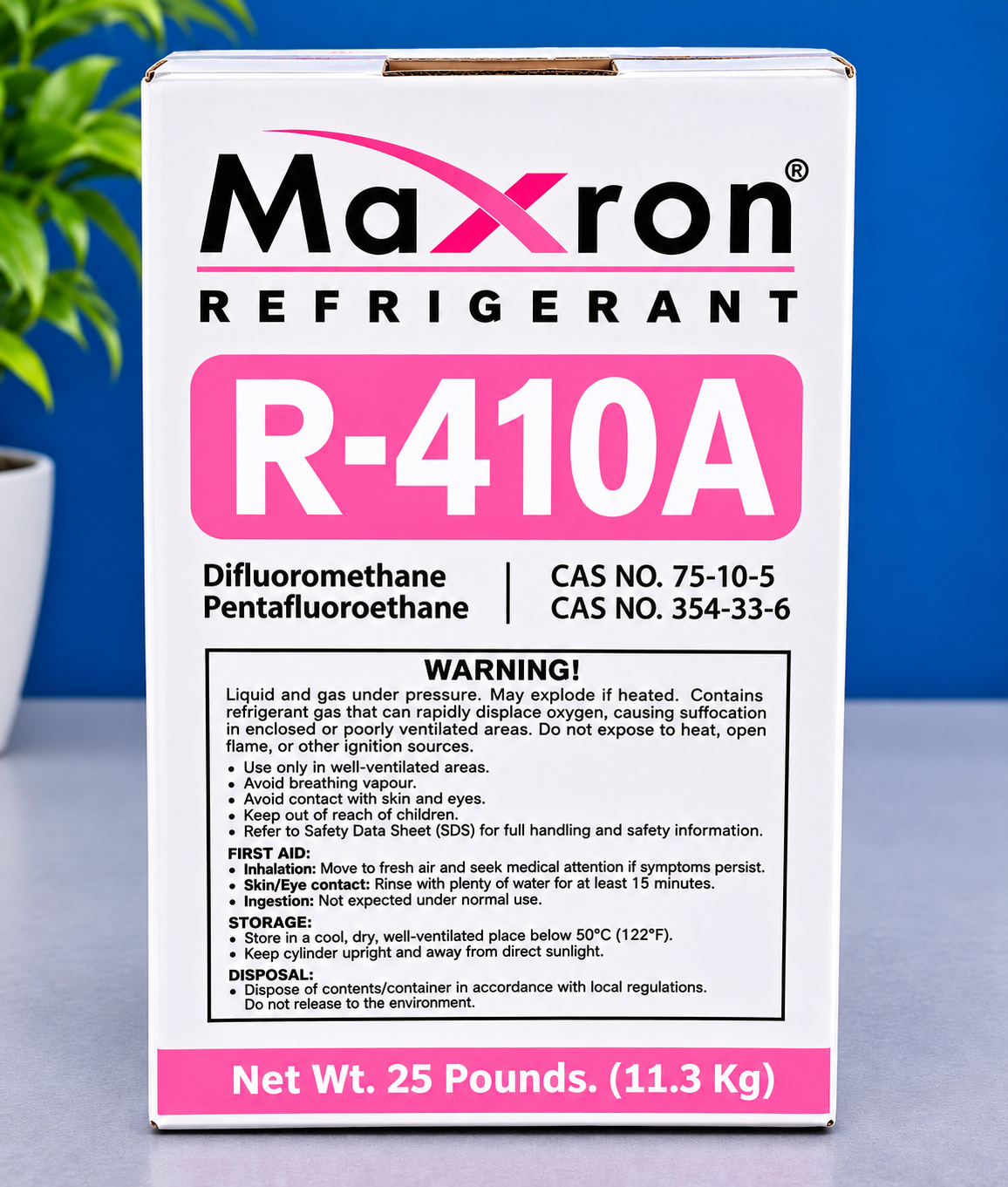
R410A Refrigerant Gas
R410A refrigerant gas in Kenya for split air conditioners, VRF/VRV systems, ducted units, and heat pumps. It’s an ozone-safe, non-flammable HFC blend, available from Maxron and other leading brands. Pickup in Industrial Area, Nairobi, or delivery across Kenya and East Africa.
Description
R410A Gas in Kenya for Split ACs, VRF Systems and Heat Pumps
Bioflex Insulation supplies genuine R410A refrigerant gas in Kenya to AC installers, HVAC contractors, facility managers, hotels, hospitals, offices and refrigeration technicians. R410A is the gas inside most split, cassette, ducted and VRF air conditioners installed across Nairobi, Mombasa, Kisumu and the rest of the country over the last fifteen years. Whether you’re commissioning a new system or recharging one after a leak repair, you need clean, genuine gas at the right pressure.
We keep R410A in stock alongside the copper pipes, Armaflex pipe insulation and accessories that go with every AC installation. That means your team can collect everything for a job in one trip to Industrial Area.
What is R410A Refrigerant?
R410A is an HFC refrigerant made of two gases in equal parts: R32 (difluoromethane) and R125 (pentafluoroethane). The mix is near-azeotropic, which means the two gases boil at almost the same temperature and behave almost like a single gas inside the system.
R410A was developed to replace R22 refrigerant gas, which damages the ozone layer and is being phased out under the Montreal Protocol. R410A contains no chlorine, so its ozone depletion potential is zero. It also carries heat better than R22, so manufacturers could build air conditioners that are smaller, quieter and more energy efficient.
Where R410A Gas Is Used
- Wall-mounted split air conditioners in homes, offices, shops and hotel rooms
- VRF / VRV central air conditioning in office blocks, malls, hospitals and hotels
- Cassette and ceiling-suspended units in restaurants, banks and conference rooms
- Ducted split systems for open-plan offices and large homes
- Rooftop and packaged units for supermarkets and warehouses
- Air-source heat pumps for hot water in hotels and homes
- Close-control units in server rooms and data centres
R410A vs R22 vs R32: What’s the Difference?
Kenya’s AC market currently runs on three main gases. Knowing which one a system uses is the first step in any service job.
| R22 | R410A | R32 | |
|---|---|---|---|
| Type | HCFC, single gas | HFC blend (R32 + R125) | HFC, single gas |
| Ozone depletion (ODP) | 0.055 | 0 | 0 |
| Global warming (GWP) | 1,810 | 2,088 | 675 |
| Operating pressure | Standard | About 1.6 × R22 | Similar to R410A |
| Flammability | A1, non-flammable | A1, non-flammable | A2L, mildly flammable |
| Compressor oil | Mineral | POE | POE |
| Main use today | Servicing older ACs | Most installed split and VRF systems | Newer inverter split ACs |
These gases are not interchangeable. R410A can’t be put into an R22 system, and R22 can’t be put into an R410A system. If you’re replacing an old R22 unit, the usual paths are a new R410A or R32 system, or a retrofit of the old unit to R407C.
How to Tell if Your Air Conditioner Uses R410A
- Check the nameplate on the outdoor unit. It lists the refrigerant type and the factory charge in kilograms.
- Look at the service port. R410A units use a 5/16″ service port, while R22 units use 1/4″. This stops the wrong gauges being connected by mistake.
- Check the cylinder colour. R410A cylinders are usually pink or rose.
- Ask your installer for the commissioning sheet if you can’t reach the outdoor unit.
Signs Your AC May Be Low on R410A Gas
- The unit runs but the air coming out isn’t cold
- Ice forms on the indoor coil or on the suction pipe
- The outdoor unit runs for longer than usual
- Oily stains appear at flare joints or valves, which is a sign of a leak
- Your electricity bill goes up with no change in use
- The unit shows a low-pressure or protection error code
A refrigeration system doesn’t “use up” gas. If it’s low, there’s a leak. Find and fix the leak before recharging, or you’ll be back in a few weeks.
Technical Specifications
| Property | R410A |
|---|---|
| Composition | R32 / R125 (50 / 50 % by weight) |
| Refrigerant type | HFC blend, near-azeotropic |
| Boiling point (at 1 atm) | −51.6 °C |
| Temperature glide | Under 0.2 °C |
| Critical temperature | 72.1 °C |
| Vapour pressure at 25 °C | About 16.5 bar (absolute) |
| Ozone depletion potential (ODP) | 0 |
| Global warming potential (GWP) | 2,088 |
| ASHRAE safety class | A1, non-flammable, low toxicity |
| Compatible oil | POE (polyolester) |
| Cylinder colour | Pink / rose |
| Pack size | 11.3 kg cylinder |
Best Practice When Charging R410A
R410A works at high pressure, and good results depend on good workmanship. Follow these steps on every installation and service job:
- Use R410A-rated tools. Gauges, hoses and recovery equipment must be rated for R410A pressures. Old R22 manifolds aren’t safe.
- Use the right copper. Use refrigeration-grade copper pipe with the wall thickness the AC manufacturer specifies, and make clean flares with an R410A flaring tool.
- Pressure test with nitrogen. Check every joint for leaks before you add any refrigerant.
- Pull a deep vacuum. POE oil absorbs moisture quickly. Evacuate to 500 microns or below and confirm the vacuum holds.
- Charge as a liquid. R410A is a blend, so charge it from the liquid side of the cylinder to keep the mix correct. Throttle the liquid into the suction side slowly.
- Charge by weight. Weigh in the charge shown on the nameplate, plus extra for long pipe runs as the manufacturer specifies. Then confirm with superheat or subcooling readings.
- Insulate the pipes. Wrap both suction and liquid lines in Armaflex insulation and seal the joints with tape. This prevents condensation drips and protects efficiency.
Using R410A in Kenya’s Climate
Kenya’s coastal heat and humidity in Mombasa and Lamu, the dry heat in Garissa and Turkana, and the cooler highlands around Nairobi and Nakuru all put different loads on an air conditioner. R410A holds its capacity well at high outdoor temperatures, which is why it’s popular in hotels and offices along the coast. In hot, dusty areas, clean the condenser coils regularly and check the gas charge during routine servicing.
The Future of R410A
Under the Kigali Amendment to the Montreal Protocol, countries are gradually phasing down HFC gases with high global warming potential. Many manufacturers are moving new split ACs to R32. But millions of R410A systems are already installed, and they’ll need genuine R410A for servicing and repairs for many years to come. Bioflex will keep supplying both gases.
Brands Available
We stock R410A from Maxron and other leading brands, all in sealed factory cylinders. Tell us your preferred brand when you enquire and we’ll confirm availability.
Why Buy R410A Gas from Bioflex
- Genuine, high-purity gas in sealed cylinders. No refilled or mixed gas.
- Several brands in stock, so you can stick with the one you trust
- Bulk supply for AC installers, VRF contractors and maintenance companies
- Everything for the job in one place: R410A, copper pipes, Armaflex insulation and tapes
- Technical support. Our HVAC team installs and services air conditioning, so we understand your job.
- Pickup at Industrial Area, Nairobi, and delivery across Kenya and East Africa
Safety and Storage
- Store cylinders upright in a cool, ventilated place, out of direct sun and below 50 °C
- Never heat a cylinder with a flame to speed up charging
- Wear gloves and goggles, because liquid refrigerant can cause frostbite
- Don’t vent R410A to the air. Recover it with proper equipment.
- Only trained, qualified technicians should charge or service refrigeration systems
Other Refrigerant Gases We Supply
- R32 refrigerant gas for modern inverter split ACs
- R22 refrigerant gas for servicing older air conditioners
- R407C refrigerant gas for chillers and R22 retrofits
- R134a refrigerant gas for car AC, fridges and chillers
- R404A refrigerant gas for cold rooms and freezers
- R600a refrigerant gas for household fridges
You can also browse our full range of refrigerant gases in Kenya.
Frequently Asked Questions
1. What is R410A gas used for?
R410A is used in split, cassette, ducted and VRF air conditioners, and in heat pumps. It’s the most common gas in AC systems installed in Kenya over the last fifteen years.
2. Can I use R410A in an R22 air conditioner?
No. R410A runs at about 1.6 times the pressure of R22 and needs a different oil. An R22 unit isn’t built for it. For older R22 systems, use R22 for servicing or retrofit to R407C.
3. Can I mix R410A and R32?
No. Never mix refrigerants. Only use the gas named on the unit’s nameplate.
4. Can R410A be topped up after a leak?
Small top-ups are common because R410A behaves almost like a single gas. After a major leak, though, it’s best to recover what’s left, fix the leak, vacuum the system and recharge it in full by weight.
5. Is R410A flammable?
No. R410A is classified A1, meaning non-flammable with low toxicity. It does run at high pressure, so it must be handled with the right tools.
6. Why does R410A have to be charged as a liquid?
It’s a blend of two gases. Charging as a liquid keeps the 50/50 mix correct inside the system.
7. How much R410A does a split AC need?
It depends on the unit and the length of the pipe run. Most 9,000 to 24,000 BTU split ACs hold roughly 0.6 to 1.8 kg. Always follow the charge on the nameplate.
8. Is R410A being phased out in Kenya?
HFCs like R410A are being phased down gradually under the Kigali Amendment. Existing systems will still need R410A for servicing for many years.
9. Do you deliver R410A outside Nairobi?
Yes. We deliver across Kenya’s counties, including Mombasa, Kisumu, Nakuru and Eldoret, and to East Africa.
Order R410A Gas in Kenya Today
Call or WhatsApp 0722 664 867 or email info@bioflexinsulationlimited.co.ke for the current R410A price and availability. Bulk orders for contractors and maintenance companies are welcome. You can pick up from our Industrial Area store in Nairobi or have it delivered, Monday to Saturday, 8 am to 5 pm.
