How to Choose the Right Pipe Insulation Thickness
One of the most common mistakes made during refrigeration and HVAC installations is choosing the wrong Armaflex pipe size. Many installers focus only on pipe thickness and forget that the inner diameter (ID) is what determines whether insulation fits correctly.
If the inner diameter is too small, the insulation will tear or compress. If it is too large, gaps will form, allowing moisture in and causing condensation. Both situations lead to poor performance and early system failure.
This guide explains how to choose the correct Armaflex pipe inner diameter using the actual sizes available, all supplied in 1.8-metre lengths, with their inch equivalents to make selection easier.
What Does “Inner Diameter” Mean in Pipe Insulation?
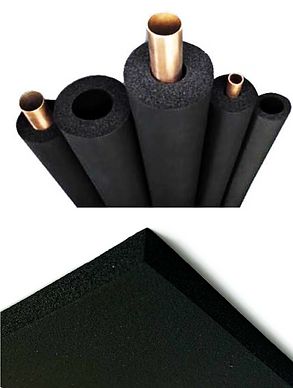
Inner diameter refers to the inside opening of the insulation tube. It must match the outside diameter of the pipe being insulated.
In refrigeration systems, copper pipes are commonly measured in inches, while insulation sizes are often listed in millimetres. Understanding how these measurements relate helps avoid costly mistakes.
Available Armaflex Pipe Inner Diameter Sizes (1.8 m Length)
All Armaflex pipe insulation supplied by Bioflex comes in 1.8-metre lengths and the following inner diameter sizes:
6mm Inner Diameter (≈ ¼ inch)
Best suited for:
- Small copper pipes
- Control lines
- Light-duty refrigeration applications
Common use:
- ¼ inch copper pipes
13mm Inner Diameter (≈ ½ inch)
Best suited for:
- Standard air conditioning copper pipes
- Light commercial refrigeration
Common use:
- ½ inch copper pipes
19mm Inner Diameter (≈ ¾ inch)
Best suited for:
- Medium refrigeration lines
- Commercial AC systems
Common use:
- ¾ inch copper pipes
28mm Inner Diameter (≈ 1 inch)
Best suited for:
- Cold room suction lines
- Larger refrigeration systems
Common use:
- 1-inch copper pipes
35mm Inner Diameter (≈ 1¼ inch)
Best suited for:
- Industrial refrigeration systems
- Chilled water lines
Common use:
- 1¼ inch pipes
42mm Inner Diameter (≈ 15/8 inch)
Best suited for:
- Heavy-duty industrial cooling
- Large cold room installations
Common use:
- 1½ inch pipes
You can view available Armaflex pipe options here:
: https://www.bioflexinsulation.com/armaflex-pipe-insulation/
Why Correct Inner Diameter Selection Matters
Choosing the correct inner diameter ensures:
- Tight fit around the pipe
- No air gaps
- No moisture penetration
- Effective condensation control
- Long-term insulation performance
Even high-quality insulation will fail if the size is incorrect.
Common Armaflex Pipe Sizing Mistakes
- Guessing pipe size instead of measuring
- Confusing pipe diameter with insulation thickness
- Using oversized insulation to “save time”
- Forcing smaller insulation onto larger pipes
These mistakes lead to sweating pipes, energy loss, and premature insulation failure.
What About Fittings, Valves, and Bends?
Straight pipe insulation alone is not enough. Fittings and valves must also be insulated to maintain a continuous thermal barrier.
This is done using elastomeric sheets, which you can view here:
Armaflex sheets you can also check our blog on https://bioflexinsulationlimited.co.ke/armaflex-pipe-size-guide/
Expert Guidance Makes a Difference
If you are unsure about pipe size, measuring once and confirming with a supplier prevents rework and wasted materials.
According to the U.S. Department of Energy, proper insulation sizing is essential for reducing heat transfer and preventing condensation in refrigeration systems.
https://www.energy.gov/energysaver/insulation
Frequently Asked Questions
It means each insulation tube is supplied in a standard 1.8-metre length.
No. Stretching damages the insulation and reduces performance.
No. Inner diameter of insulation must match the outer diameter of the pipe.
Air gaps form, allowing condensation and moisture buildup.
Call us Today:
For help choosing the correct Armaflex pipe inner diameter for your refrigeration or HVAC system, contact Bioflex Insulation Ltd on +254722664867 for expert guidance.