
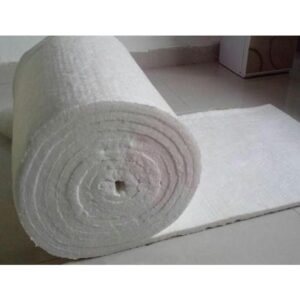
128kg/m³ High Density Ceramic Fiber Blanket – 1260°C
128 kg/m³ Ceramic Blanket Kenya – High Density 1260°C Industrial Insulation In high-temperature industrial systems, insulation density is not a minor detail — it is a performance-critical engineering specification. Our 128 kg/m³ ceramic blanket solution for Kenya is designed for environments where mechanical strength, dimensional stability, and long-term thermal reliability are required under continuous exposure up to 1260°C. Unlike lower-density ceramic fiber materials, a 128 kg/m³ configuration offers improved fiber compaction, enhanced resistance to vibration, and reduced shrinkage during prolonged heat cycles. This makes it particularly suitable for heavy-duty furnace systems, boiler shells, and thermally stressed industrial chambers. Bioflex Insulation supplies and installs high-density ceramic fiber insulation systems across Kenya, serving manufacturing plants, foundries, cement facilities,s and power generation industries. Understanding the Engineering Importance of 128 kg/m³ Density Density affects three major performance factors: 1️⃣ Thermal Conductivity Higher-density fiber structures reduce air gaps within the insulation matrix, contributing to more stable thermal resistance under sustained high temperatures. 2️⃣ Mechanical Strength A 128 kg/m³ ceramic blanket withstands vibration and mechanical stress better than lighter grades, especially in rotating or pressure-driven systems. 3-Dimensional Stability Lower-density materials may shrink or deform faster under prolonged heat exposure. The 128 kg/m³ grade minimizes structural degradation over time. For engineers specifying insulation systems, density is often as critical as temperature rating. If you require full-dimensional specifications, refer to our 25mm ceramic fiber blanket Kenya technical product page. Technical Specifications of 128 kg/m³ Ceramic Blanket Density: 128 kg/m³ Thickness: 25 mm Maximum Continuous Operating Temperature: 1260°C Roll Length: 7.3 meters Roll Width: 0.6 meters Material Composition: High-purity alumino-silicate ceramic fiber The blanket’s flexible structure allows easy wrapping around curved boiler shells and furnace linings while maintaining consistent thickness across surfaces. Performance in High-Vibration Industrial Environments In boiler systems and industrial furnaces, vibration and thermal cycling are common. Over time, insufficiently dense insulation may compress or lose structural integrity. The 128 kg/m³ ceramic blanket Kenya grade offers: Improved fiber entanglement Reduced sagging during vertical installation Enhanced anchor retention Greater resistance to mechanical displacement For temperature-focused applications, see our 1260-degree ceramic insulation Kenya page. Common Applications of 128 kg/m³ Ceramic Blanket This density grade is frequently specified in: Industrial Boilers Provides thermal containment while resisting shell vibration. Heat Treatment Furnaces Maintains stable internal temperatures during repeated heating cycles. Kiln Linings Ensures durability under sustained high-temperature exposure. Cement and Steel Plants Used in expansion joints and high-heat duct systems. Power Generation Equipment Supports insulation of turbine housings and heat chambers. For boiler-specific insulation systems, review our ceramic blanket for boilers in Kenya page. Installation Considerations for 128 kg/m³ Ceramic Blanket Kenya Proper installation ensures maximum insulation performance. Our installation services include: Heat exposure evaluation Mechanical anchoring system design Layer overlap planning Vertical and horizontal fixing methods Secure fastening to prevent displacement Handling must follow safe fiber management practices. Before installation, consult our ceramic fiber blanket safety guide. Energy Efficiency & Long-Term Cost Impact Specifying the correct density can significantly reduce operational costs. Benefits of installing 128 kg/m³ ceramic insulation include: Reduced thermal energy loss Lower fuel consumption Stable internal process temperatures Reduced maintenance frequency Extended equipment lifespan Over time, properly installed high-density insulation reduces the total cost of ownership for industrial equipment. .