
The Role of Ceramic Fiber Cloth in Modern Industry
Why Modern Industries Need Advanced High-Temperature Insulation
Industries that operate under extreme temperatures—including metallurgy, petrochemicals, cement, power generation, and glass manufacturing—face constant pressure to protect equipment, personnel, and infrastructure. In these environments, insulation failure not only causes heat loss; it also leads to safety incidents, unplanned shutdowns, and escalating operating costs.
Traditional insulation materials often degrade under prolonged thermal stress. Over time, they crack, shrink, or lose structural integrity. As a result, industries increasingly rely on ceramic fiber cloth as a modern, high-performance solution engineered specifically for extreme heat, thermal cycling, and fire-prone conditions.
What Makes Ceramic Fiber Cloth an Industrial-Grade Material
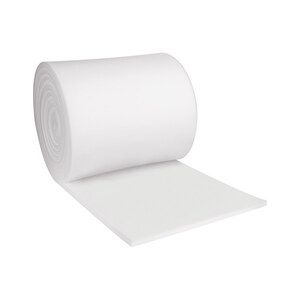
Ceramic fiber cloth is manufactured from alumino-silicate fibers, woven into a flexible yet mechanically strong fabric. This structure allows it to combine properties that are rarely found together in insulation materials: very high temperature resistance, flexibility, chemical stability, and durability.
Because of these characteristics, ceramic fiber cloth functions not only as insulation but also as a protective barrier, sealing material, and fire-safety component across many industrial systems.
Key Industrial Applications of Ceramic Fiber Cloth
1. Metallurgical and Foundry Operations
In metal processing environments, exposure to molten metal and radiant heat is constant. Ceramic fiber cloth is widely used to:
- Wrap ladles and molten metal containers
- Insulate furnace doors and access points
- Protect surrounding equipment from heat radiation and splashes
By limiting heat escape and shielding nearby structures, the material improves safety while stabilizing process temperatures.
2. Petrochemical and Refining Plants
Petrochemical facilities operate under high temperatures combined with aggressive chemical environments. Ceramic fiber cloth plays a critical role as:
- Insulation jackets for hot pipelines
- Expansion joint covers
- Flange and valve seals
Because it resists both heat and chemical attack, it helps maintain system integrity and prevents thermal degradation of process equipment.
3. Power Generation Facilities
Power plants demand insulation solutions that improve efficiency without adding excessive weight or complexity. Ceramic fiber cloth is commonly applied around:
- Boilers and turbines
- Exhaust ducts and chimneys
- High-temperature gas paths
Reducing radiant heat loss, it improves thermal efficiency, lowers fuel consumption, and reduces maintenance downtime caused by heat damage.
4. Cement and Glass Manufacturing
Kilns and furnaces in cement and glass plants operate under extreme and continuous thermal stress. Ceramic fiber cloth:
- Insulates kiln expansion joints
- Protects heat treatment chambers
- Withstands repeated thermal shock
Its ability to flex during expansion and contraction makes it especially effective where rigid insulation would crack or fail.
5. Automotive and Aerospace Applications
In automotive and aerospace environments, space constraints and temperature extremes demand lightweight, flexible protection. Ceramic fiber cloth is used as:
- Heat shields
- Flame barriers
- High-temperature gaskets
It protects sensitive components while maintaining performance in high-speed, high-heat operations.
Why Industries Choose Ceramic Fiber Cloth
1. Exceptional Thermal Stability
Ceramic fiber cloth remains structurally stable at continuous temperatures of up to 1,260°C. Even under repeated thermal cycling, it resists melting, shrinking, and cracking.
2. Chemical and Corrosion Resistance
The material performs reliably in corrosive and acidic environments, making it suitable for chemical plants, refineries, and heavy-duty industrial systems.
3. Flexibility and Installation Efficiency
Unlike rigid insulation boards, ceramic fiber cloth can be cut, sewn, wrapped, and shaped around complex geometries. This reduces installation time and simplifies maintenance and retrofitting.
4. Long-Term Cost Efficiency
Although the initial cost may be higher than basic insulation fabrics, its long service life and minimal maintenance requirements result in lower total lifecycle cost.
Comparison with Other Insulation Materials
| Property | Ceramic Fiber Cloth | Fiberglass | Asbestos |
|---|---|---|---|
| Maximum Temperature | Up to 1,260°C | ~550°C | ~700°C |
| Safety | Safe when handled correctly | Generally safe | Hazardous / banned |
| Durability | Excellent | Moderate | High but unsafe |
| Flexibility | High | Moderate | High |
| Best Use | Extreme heat & fire protection | Low–medium heat | Obsolete |
Verdict:
Ceramic fiber cloth clearly outperforms fiberglass in high-temperature environments and replaces asbestos as a safe, modern industrial solution.
Complementary High-Temperature Insulation Materials
To build complete and reliable insulation systems, ceramic fiber cloth often works alongside other materials, including:
- Ceramic fiber blankets for bulk furnace and kiln insulation
- Rockwool insulation for thermal and acoustic control
- Fiberglass insulation for general-purpose applications
At Bioflex Insulation Limited, our specialists guide clients in selecting the right combination of materials based on operating temperature, mechanical stress, and safety requirements.
Frequently Asked Questions (FAQs)
Yes. It remains stable under continuous flame exposure while maintaining insulation performance.
It insulates boilers, turbines, and exhaust ducts, improving efficiency and protecting metal surfaces from thermal stress.
In many cases, yes. If it remains structurally intact, it can be reinstalled, improving cost efficiency.
No. Standard cutting and stitching tools are sufficient, which simplifies handling and maintenance.
Conclusion
Ceramic fiber cloth has become a core component of modern industrial insulation and fire-protection systems. Its unmatched combination of heat resistance, flexibility, chemical stability, and durability helps industries protect equipment, improve efficiency, and reduce operational risk.